
The Version of AI You Don't Want
There's a version of AI automation spreading through service businesses right now that's making them worse.
Customers call and get a bot that can't answer anything specific. They get quote responses that feel copied from a template. They send a message and wonder if anyone actually read it. At some point, the relationship disappears, and they start looking at competitors.
This is what happens when AI gets dropped into a business without any thought about where humans need to stay in the process. The technology is real and the efficiency gains are real, but so is the cost of making your customers feel like a ticket number.
For service businesses, this risk is higher than most. You're selling to people who need a vendor they can trust, often under deadline pressure, often spending real money on something that has to go right. One cold, robotic interaction can cost you a long-term account.
Why Automation is Now Necessary
The service companies that move first are going to have a structural advantage that's hard to close: faster response times, lower cost per lead, more consistent follow-up, and teams focused on high-value work instead of administrative overhead. The ones that wait are going to find themselves competing against businesses that can move twice as fast at half the cost.
At the same time, moving fast in the wrong direction is worse than moving slowly. Businesses that automate without a clear strategy for keeping humans in the process are going to damage customer relationships they spent years building. There's a real cost to getting this wrong, and it's not always visible until the damage is done.
The window to get ahead is open. But how you use AI matters as much as whether you use it.
Where Humans Are Irreplaceable
The goal of AI in your business should be to protect your team's time and attention for the moments that actually matter.
Think about what your best salesperson or customer service rep does well. They read a situation. They add context a form can't capture. They say something that makes a customer feel like they're talking to a real person who understands their specific problem. That's worth protecting.
The problem is that same person is also searching through pricing sheets, calculating quote details, chasing down follow-ups, logging calls, and managing a backlog. All of that work crowds out the things only they can do.
AI handles the repetitive work. Humans handle the relationship. That's the split that works.
What Human-in-the-Loop Actually Looks Like
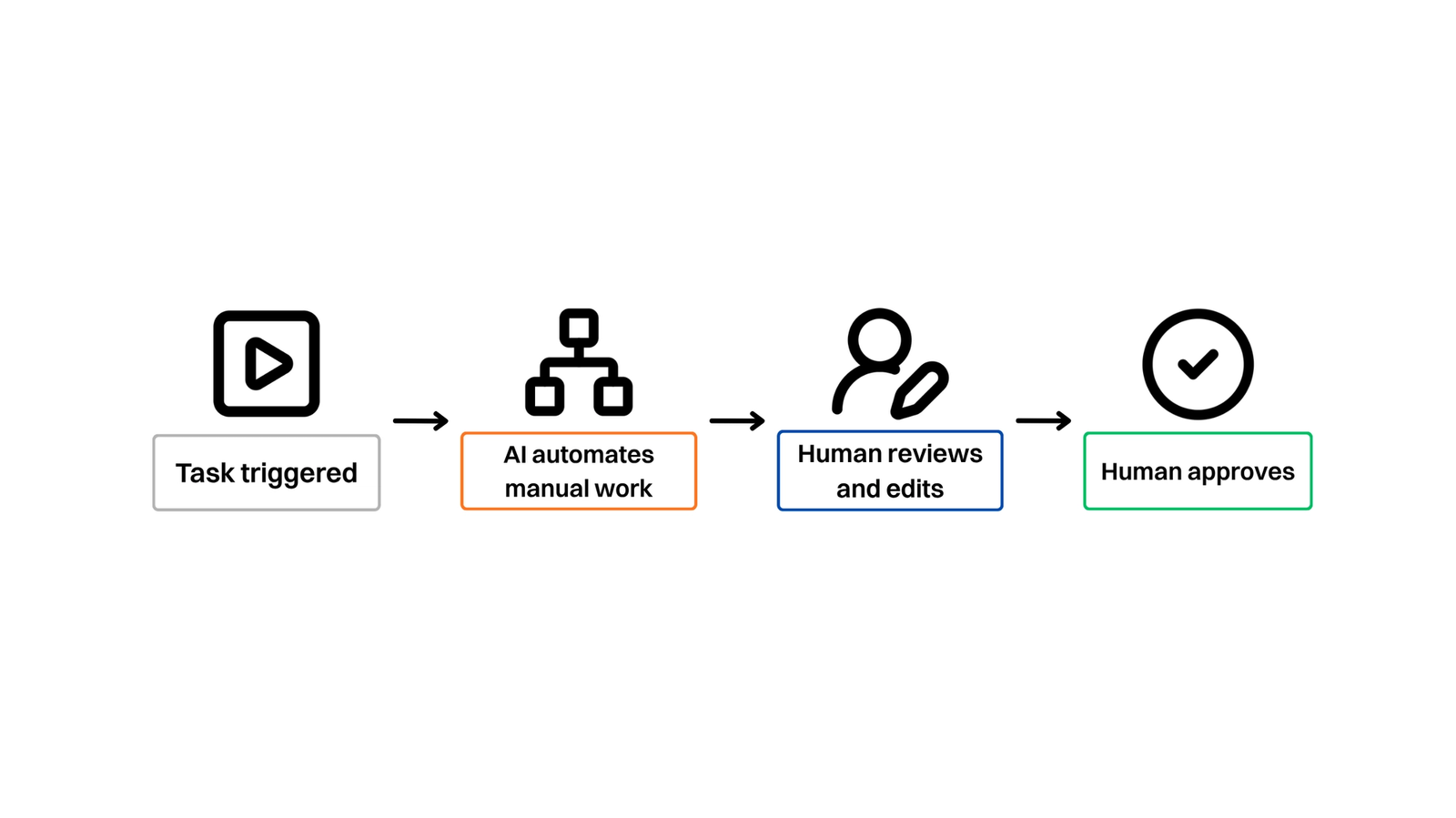
"Human in the loop" means the human is a required step in the process, not an optional override.
In practice, here's how it works for a sales or quoting workflow:
A request for a quote comes in. AI pulls the relevant details, drafts an initial response, and builds out a quote based on your pricing and service offerings. That draft goes to a team member for review before anything sends. The team member can edit the tone, add a specific note about the customer's situation, or flag something that needs a phone call first. Then it goes out under their name.
The customer gets a fast, accurate, personalized response. Your team member spent two minutes instead of twenty. The relationship is intact.
This is very different from auto-responding and hoping for the best. The speed comes from AI. The quality comes from the human who approved it.
The Work Required to Get This Right
This is where most business owners underestimate what's involved.
Getting to a workflow where AI is actually helping requires real setup and constant maintenance. Here's what it looks like for a sales or quoting workflow:
You need clean pricing and service data that AI can actually use to generate accurate quotes. You need to train the AI on your business's details, and update it when details change. You need a process for how leads are categorized and what triggers what. You need your team trained on when to approve, when to edit, and when to stop the automated flow and pick up the phone. You need to constantly monitor outputs and correct the cases where AI gets it wrong.
None of that is set-and-forget. Building a human-in-the-loop system well means documenting your process closely enough that AI can mirror it, and that's more work than most people expect going in.
The businesses that put in that work end up with something powerful: a team that's faster, more consistent, and more available for the conversations that actually close deals. The ones that skip it end up with automation that creates problems instead of solving them.
The Businesses That Get This Right Will Stand Out
Most service companies are still handling lead response and follow-up manually, or they're experimenting with full automation and losing the human element in the process.
There's a gap in the middle worth owning. Fast response, accurate quotes, consistent follow-up, and a customer experience that still feels personal.
AI gets you the speed and consistency. The human in the loop gets you the quality and trust. Together, that's a competitive advantage that's hard to copy.
HyperRep is built around this model. AI drafts, humans approve, and nothing sends without someone's eyes on it. Our team handles the setup and maintenance. If you want to see how it works for your business, book a quick demo.