
Your Office Team Is Your First Product
Before a new customer ever sees your equipment show up on a job site, they've already formed an opinion about your company. They called you, emailed you, or filled out a form. Then they waited.
What happened next, whether someone called back fast, sent a clear quote, followed up without being asked, determined whether they felt good about hiring you or started looking elsewhere.
You might be winning in the field. But a new customer doesn't know that yet. To them, it looks like everyone is offering a similar service. They haven't experienced your reliability, your drivers, or your response time when something goes wrong on a job site. So the clearest thing they have to go on is how you treat them before they're even a customer.
That means your office team isn't just support. They're your first product. And how they communicate with leads and customers, how fast, how professionally, how consistently, is one of the most important variables in whether you win or lose business.
As we've written about before, how you respond to customers matters more than most leaders realize. The problem is that great communication is hard to sustain as you grow.
Why Communication Quality Slips as Teams Grow
When it's just you and one or two people handling customers, it's personal. You set the tone. You know every account. You can feel when something's off and fix it on the spot.
When your team grows to five, eight, twelve people, you're not in every conversation anymore. New hires bring different habits. Some reps move fast, some are more thorough, some go quiet when they get busy. Without a structure that enforces quality, performance drifts.
This a systems problem, and it's one of the most common growing pains in the site service industry. We've covered it in depth here.
You can write standards, run training sessions, and set expectations in meetings. Those things help. But if the incentives aren't aligned, even great people will naturally prioritize whatever feels most urgent over what's most important. And "respond to this lead within 10 minutes" rarely feels as urgent as everything else going on in the office.
That's where commission comes in.
How Commission Gets Everyone Pulling in the Same Direction
Even a small commission structure changes behavior in a meaningful way.
When a rep has something to gain from closing a lead, they respond faster. They follow up. They pay attention to how they're coming across. They don't let a quote sit in their outbox. The behavior you were trying to manage through culture and coaching starts to happen naturally because the rep's interests are aligned with the company's.
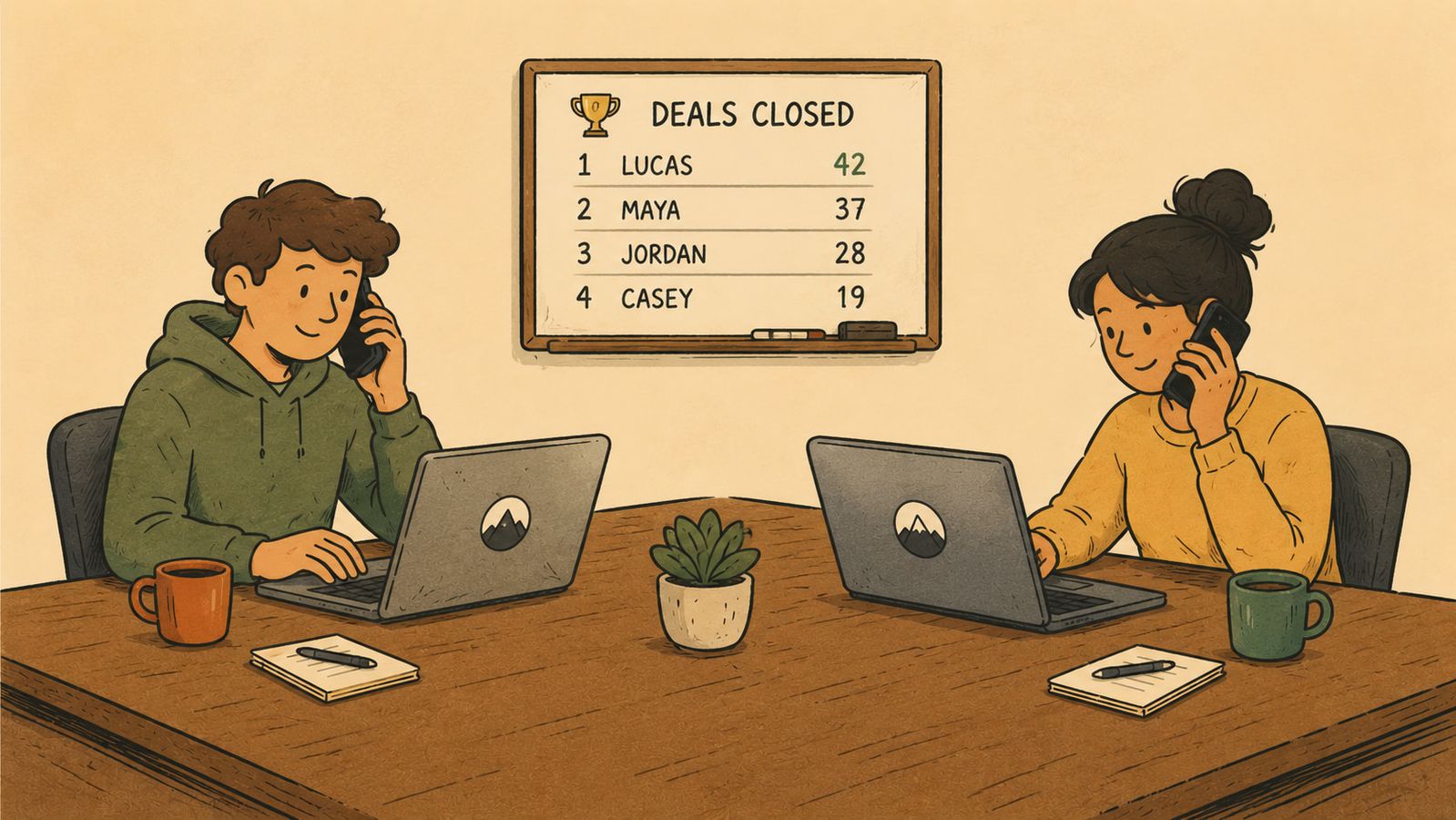
Think about what it looks like when a new lead hits the shared inbox and three reps are actively competing to claim it first. That's the energy you want. You can layer on a leaderboard, track close rates by rep, run weekly or monthly contests, and suddenly you've got a team that's genuinely engaged with the results.
The key insight here is that commission is leverage. You don't need to offer a huge percentage to change behavior. Even a modest amount tied to the right outcomes, closed jobs, upsells, or renewal revenue, is enough to make the work feel different. The rep who was doing a decent job before starts doing a great job because there's now a personal stake in it.
Start simple. Pick one thing to commission, such as new jobs closed, and track it for 90 days. Watch what changes.
Why Most Site Service Businesses Struggle to Pay Commission at All
Here's where it gets honest: most companies in this space want to pay commission but can't pull it off cleanly. The reason is almost always the same.
Your ERP or operating system is great at managing jobs once a customer is sold. It handles dispatch, billing, contracts, and service records. But it wasn't designed to track what happened before the customer signed. There's no record of who responded to the lead, how fast, what was said, whether there was a follow-up, or who ultimately closed the deal.
So when it comes time to run commission, you're stuck. You know revenue went up, but you can't prove who drove it. You have a rough sense that one rep is outperforming others, but the data isn't there to back it up. And without clean attribution, paying commission fairly is nearly impossible. You end up doing it manually, relying on memory, or skipping it altogether.
Some companies try to solve this by adding a CRM. That helps with tracking sales activity, but most CRMs don't connect to your ERP. So you have customer information living in two systems that don't talk to each other, and you still can't connect a rep's activity in the CRM to actual billed revenue in the operating system.
The result is a broken loop. You want to pay commission. You know it would help. You just don't have the infrastructure to do it right.
How to Fix It: The System You Actually Need
To pay commission properly, you need one connected system that tracks the full customer journey, from the first inquiry through to the billed job.
Here's what that looks like in practice:
Track all lead activity in one place. Every inbound lead, regardless of where it came from, web form, phone call, referral, should land in a single system. You need to be able to see when it came in, what channel it came through, and what happened next.
Log every rep action against that lead. Who responded? How fast? What did they send? Did they follow up? This is the input data that makes commission defensible. When you can show a rep the exact timeline of their activity on a deal, there's no ambiguity about whether they earned it.
Track who closed the sale. The system needs to know which rep converted a lead into a customer, not based on memory but based on logged activity. This is what makes attribution clean.
Connect to your ERP. This is the part most solutions miss. You need the lead and rep attribution from the sales system to link to the customer record in your operating system. That way, you can confirm the job was actually billed, pull revenue data, and calculate commission based on real numbers, not estimates.
When those pieces are in place, running commission stops being a manual headache and starts being something you can automate. You set the structure once, and the system tells you what to pay.
How HyperRep Makes This Possible
HyperRep is built specifically for site service businesses that want to get serious about their office-side performance.
We track every lead from first touch, log every rep action, and show you exactly who did what on the sales side of every deal. When a job closes, you can see the full activity trail that got it there. And because we integrate with your ERP, we can connect that activity to actual billed revenue, giving you clean, accurate data to run commission off of.
We also report it out for you. Based on the commission structure you set, HyperRep calculates what each rep has earned and surfaces it in a format your team can actually use.
If you've been trying to figure out how to pay your team fairly for the deals they bring in, but the data just hasn't been there to do it, this is exactly the problem we solve.
Talk to our team and we'll show you how it works for a business like yours.